

Agent architecture, engagement and impact
We divide the art of building agents into two parts: Agent architecture and engagement and impact.

Grounded in humanAI
This work builds on our humanAI philosophy, the idea that AI should amplify human capability, not replace it.
We design and build agents that amplify your people, earn trust through evidence, and align value to your objectives and your employees' needs, not just the technology.
Rather than starting with the technology, we balance the platform your team has already invested in with what your people actually need, and with the business impact that follows. Adoption happens when leaders and domain experts help employees see how an agent changes the way work gets done, not when a tool simply becomes available.
Defining responsibilities and leveraging domain experience and trust.
Carpool helps build agents that are aligned with business objectives, employee needs, and organizational priorities. Rather than prioritizing technology, we balance infrastructure with human needs, and creating measurable business impact.
Our approach is built on our proven trust transfer and influencer models—IT provides the AI foundation and infrastructure, but adoption happens when HR leaders, HR business partners, and business leaders help employees understand how agents improve the way work gets done using their unique domain expertise.
This is a humanᴬᴵ experience designed to empower people, not replace them. By connecting Microsoft AI investments to workforce activation, we help organizations build trusted agents that elevate employee capability and accelerate business outcomes.
Engagement strategy role responsibilities

Partner
Provides strategic guidance, delivery expertise, and alignment with Microsoft's AI ecosystem and best practices.


IT leadership
Establishes the AI foundation through governance, security, platform readiness, and technical enablement.

HR leadership
Connects AI initiatives to workforce strategy, organizational priorities, and long-term people outcomes.
The trust transfer framework
People rarely adopt change because they are instructed to. They adopt change because trusted leaders, peers, and experiences reduce uncertainty and demonstrate value.
The trust transfer Model helps organizations identify and activate the stakeholders who influence adoption, creating a pathway for trust, confidence, and behavioral momentum to spread throughout the organization. By transferring trust through existing relationships and communities, organizations can accelerate Humanᴬᴵ adoption while strengthening culture and employee engagement.
<Link to trust transfer framework>

HR business partners
Translate AI capabilities into business relevance by identifying opportunities, engaging leaders, and supporting adoption.

Business operations
Applies agents to real-world workflows, measures impact, and scales successful outcomes across the organization.
Agentic architecture
How we design and build agents that amplify your people, earn trust through evidence, and align value to company objectives and employee needs.
The agent architecture spine
We move every agent through six stages, from foundation to proven value. Each stage produces one artifact and clears one gate before the next begins.
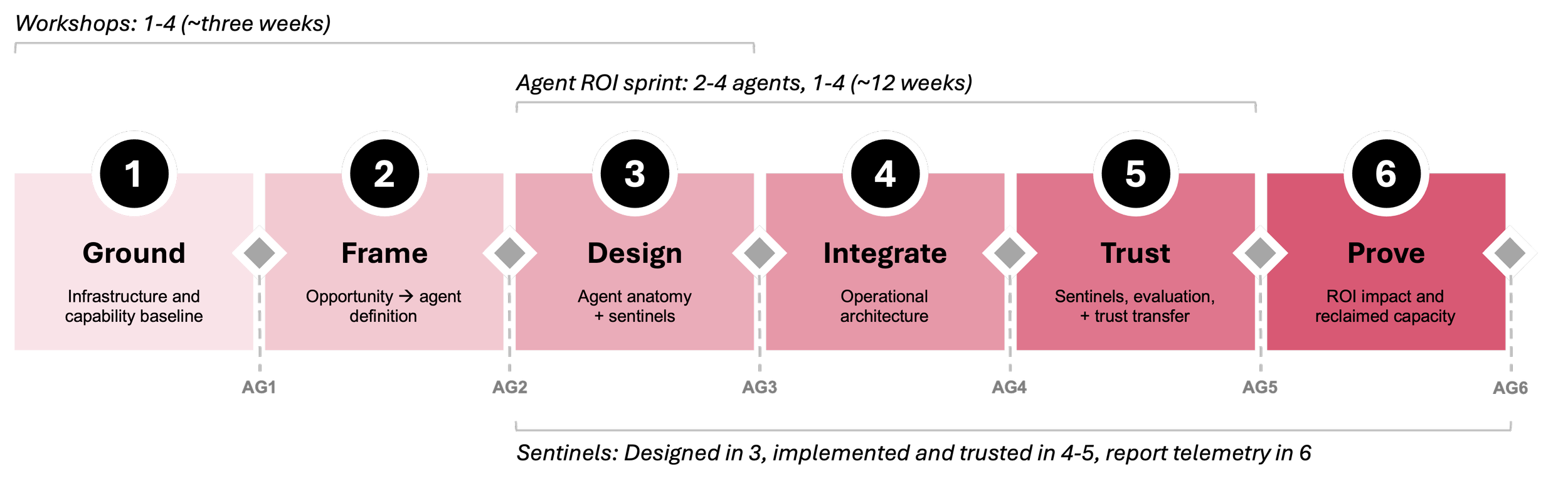
AG1
Foundation ready: we know the estate, data, and identity we are building on.
AG2
Worth building: The opportunity is real and the pattern fits.
AG3
Safe by design: guardrails are designed in, not bolted on.
AG4
Buildable & connected: the connections, data, and identity actually work.
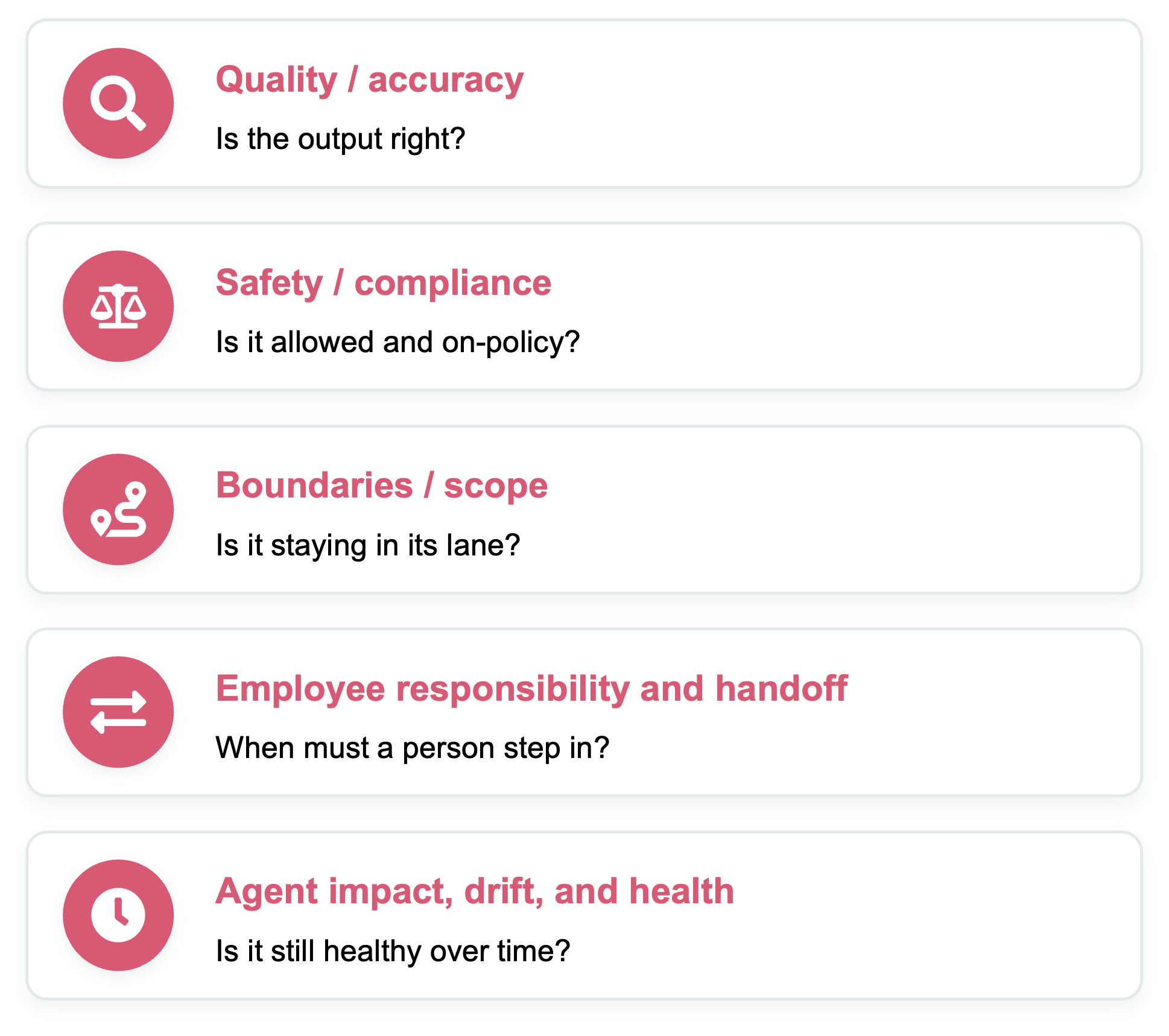
Sentinels: The stewardship layer
Sentinels are humans in the loop aligned to the business units and educated by IT. They check and watch an agents in operation within their ecosystem. They watch, and where they sit, is a design decision we make with leadership and are mandatory before any agent goes live.
Minimum to go live: Build quality, safety, vision alignment, business impact, and employee responsibility
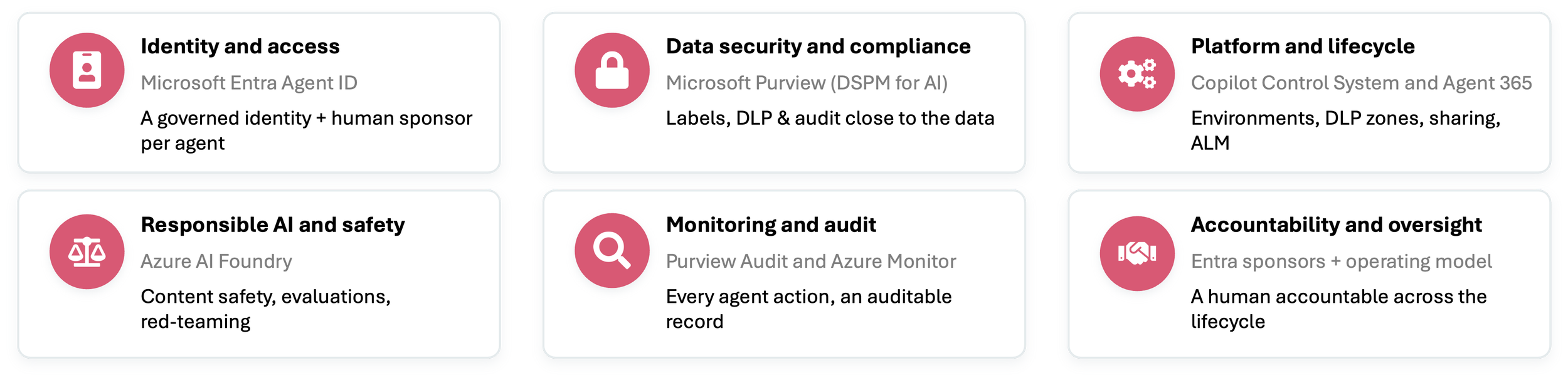
Governance: Control plane tools
Sentinels are humans in the loop aligned to the business units and educated by IT. They check and watch an agents in operation within their ecosystem. They watch, and where they sit, is a design decision we make with leadership and are mandatory before any agent goes live.
Minimum to go live: Build quality, safety, vision alignment, business impact, and employee responsibility
AG5
Trusted to operate: autonomy is earned with evidence.
AG6
Proven value: reclaimed capacity is real and defensible.
Engagement and impact
Adoption dashboards can be full of activity metrics and empty of signal. We treat engagement as a measurable, scoreable system, not just a pulse check, so leaders know exactly where adoption is strong, where it is fragile, and what to do next.